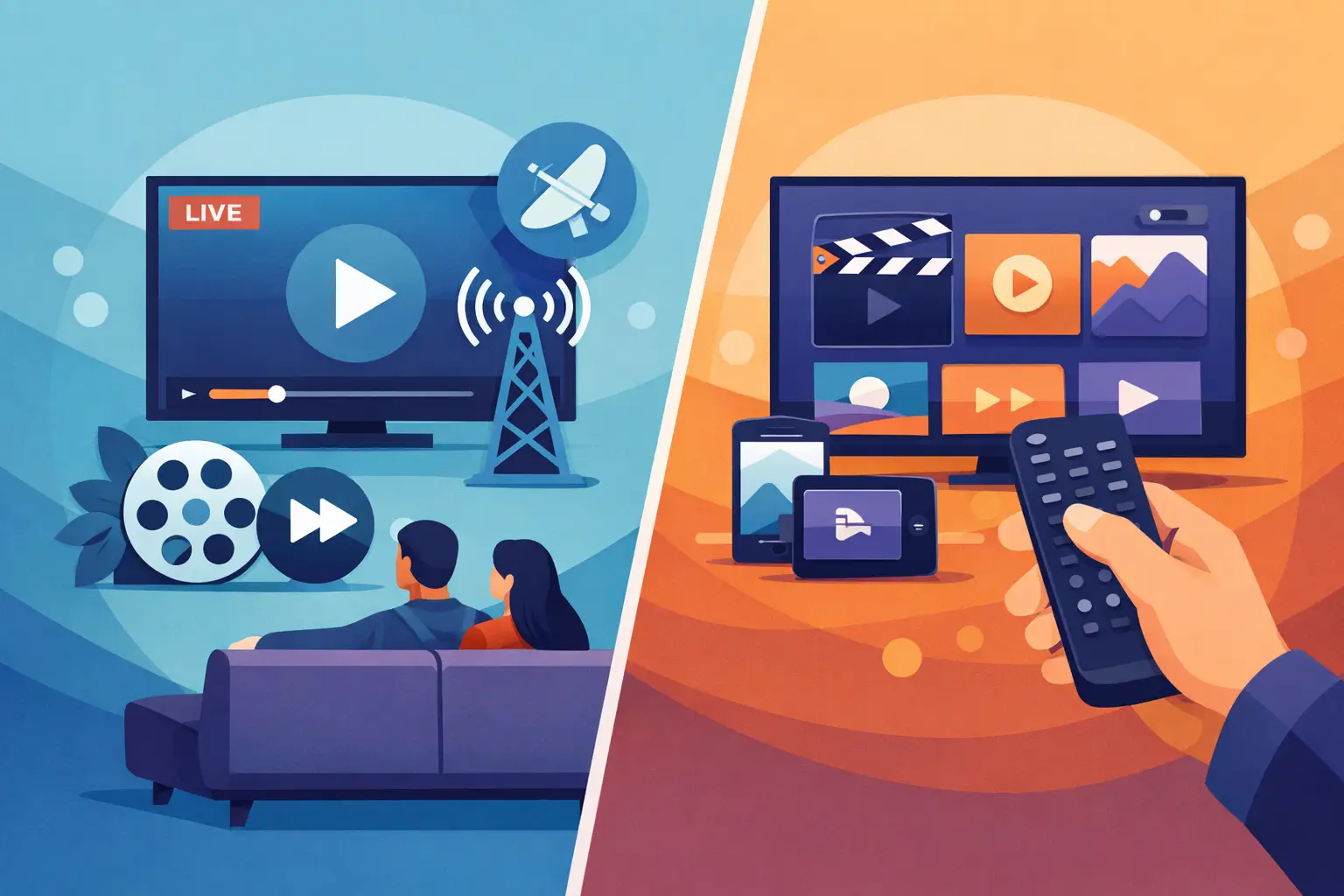
A viewer opens a streaming app looking for something different. Not the same recycled catalog, not another algorithm pushing the safest pick. They want a surprise, or they want control. That tension is exactly what makes FAST channels vs on demand such a useful conversation for indie film and music. These are not interchangeable experiences, and for creators, the difference can shape discovery, audience growth, and revenue.
For mainstream platforms, the debate often centers on convenience. For indie media, it goes deeper. FAST channels can create momentum around programming, mood, and curation. On-demand libraries give viewers precision and creators long-tail access. If you care about getting independent work seen instead of buried, the format matters.
What FAST channels vs on demand really means
FAST stands for free ad-supported streaming television. In plain English, a FAST channel acts more like a programmed stream. Viewers tune in and watch what is playing, usually organized around a theme, genre, artist lane, or audience vibe. It feels closer to traditional TV, but built for connected devices and free streaming.
On demand works the opposite way. The viewer chooses the exact title, starts it when they want, pauses it, and returns on their own schedule. There is no fixed programming grid. The power sits with the user.
That may sound simple, but the behavior each model creates is very different. FAST lowers the decision burden. On demand increases control. One favors guided discovery. The other favors intent.
For indie audiences, both have real value. Many viewers do not arrive knowing the name of a specific underground documentary or emerging music video. They just know they want something outside the mainstream. A good FAST channel meets that moment. At the same time, once someone hears about a title, follows a filmmaker, or wants to revisit a project, on demand becomes the better tool.
Why FAST channels work so well for discovery
FAST channels solve a real problem in streaming: too much choice can kill attention. When people have to sort through endless tiles, many leave without watching anything. That is especially brutal for independent creators who do not have giant marketing budgets or celebrity cast recognition.
A FAST channel gives the platform a chance to program with purpose. Instead of asking the audience to do all the work, the channel says, here is the vibe, here is the lane, press play. That can be powerful for music videos, shorts, festival selections, cult cinema, regional scenes, and genre collections that benefit from context.
It also creates adjacency. A viewer might come for one music artist, then stay through a short film, then discover a director they never would have searched for. That kind of accidental exposure is gold in the indie space. It is how careers build audience one watch session at a time.
There is also a psychological advantage. Programmed viewing feels active without demanding too many decisions. For tired viewers on Roku, Apple TV, mobile, or the web, that matters. They want free, easy, and interesting. FAST checks all three boxes when the programming is sharp.
For creators, FAST can deliver something many on-demand libraries struggle with: placement inside a living stream. Your work is not just sitting on a shelf waiting to be found. It becomes part of a scheduled or themed experience that can keep surfacing to new viewers.
Where on-demand still wins
FAST is strong for discovery, but on demand is still the better format for intentional viewing. If someone wants a specific indie feature, documentary, concert film, or music video, they do not want to wait for it to appear in a stream. They want immediate access.
That matters even more for creators building direct relationships with fans. When you promote a title on social media, email, press, or at a festival, the audience needs a clean path from interest to play. On demand does that. It turns curiosity into action without friction.
On-demand libraries are also better for repeat viewing and deeper catalog value. A film does not have to fit a programming block to stay relevant. It can continue attracting viewers weeks, months, or even years after release. For niche work, that long-tail behavior is not a side benefit. It is the business model.
Creators should care about this because not every project performs best in a lean-back environment. Some films demand focus. Some music releases depend on fan communities searching by artist. Some festival titles need a defined window where viewers can access exact selections. On demand gives that control.
The trade-off is visibility. A big catalog can become a digital warehouse if search, merchandising, and recommendation systems are weak. Simply being available is not the same as being discovered.
FAST channels vs on demand for creators
If you are a filmmaker, musician, or festival organizer, the right question is not which format is better in theory. It is which format matches your project, audience behavior, and monetization plan.
FAST channels are often stronger for top-of-funnel exposure. They help new audiences encounter your work without already knowing your name. That is huge for emerging creators who need awareness before they can build fandom. If your content benefits from curation, cultural framing, or being grouped with similar work, FAST can do heavy lifting.
On demand is stronger for conversion and retention. It gives fans a direct path to your catalog. It supports promotional campaigns. It works better when your audience is actively seeking you out, or when your release strategy depends on a specific title being available at a specific moment.
There is also the revenue angle. FAST monetizes through ads, which can reward scale, repeat programming, and broad session time. On demand can support ad-based viewing too, but it often creates clearer title-level engagement patterns. Depending on the platform, creators may get different visibility into what is performing and why.
This is where indie strategy needs to stay honest. A single feature film may not carry a 24/7 channel by itself. A catalog of shorts, music videos, interviews, and behind-the-scenes content might. A festival with a strong identity may do well with both programmed streams and title-specific access. It depends on volume, format, audience expectations, and how much editorial packaging the content can support.
What viewers actually want
Most viewers do not pledge loyalty to one format. They switch modes throughout the week. Sometimes they want to browse and be surprised. Sometimes they know exactly what they want. That means FAST channels vs on demand is rarely an either-or decision from the audience side.
For indie audiences, the mix is even more important because discovery and access are both fragile. If discovery fails, great work stays invisible. If access fails, interest disappears before the play starts.
The best platforms understand that behavior. They use FAST to create cultural energy around programming and use on demand to capture intent. One pulls people in. The other gives them somewhere to go next.
That is especially relevant for independent media, where trust matters. If a viewer finds one great film through a curated stream, they are more likely to explore the catalog. If they fall in love with an artist on demand, they may be open to leaving a FAST channel on in the background and discovering related work. Each model strengthens the other when the experience is built right.
The smart move is not choosing sides
The loudest takes on streaming love false binaries. FAST is the future. On demand is dead. Or the reverse. That is not how people actually watch, and it is not how indie creators should think about distribution.
The smarter play is to treat each format like a different job. FAST is your discovery engine, your curation layer, your always-on showcase. On demand is your searchable archive, your campaign destination, your fan access point. One creates serendipity. The other captures demand.
For a platform built around independent film and music, that combination is not just convenient. It is strategic. A creator-first ecosystem needs both browsing and destination behavior, both passive watch time and active title selection, both free exposure and repeat access. That is one reason VersusMedia has leaned into both experiences for indie audiences and grassroots creators.
If you are a viewer, the best format is the one that gets you to your next great find. If you are a creator, the best format is the one that keeps your work moving instead of waiting. The real opportunity is not picking a winner. It is putting your content where discovery and intent can finally work together.