If your film is finished and you are staring at a distribution plan with more acronyms than answers, this is the fork in the road that matters: AVOD vs TVOD for filmmakers. One model bets on access and scale. The other bets on willingness to pay. Neither is automatically better, and for indie creators, the wrong choice can stall momentum just when you need it most.
The real question is not which model sounds more premium. It is which one fits your film, your audience, your budget, and your release timeline. That is where smart distribution starts.
AVOD vs TVOD for filmmakers: What changes in practice?
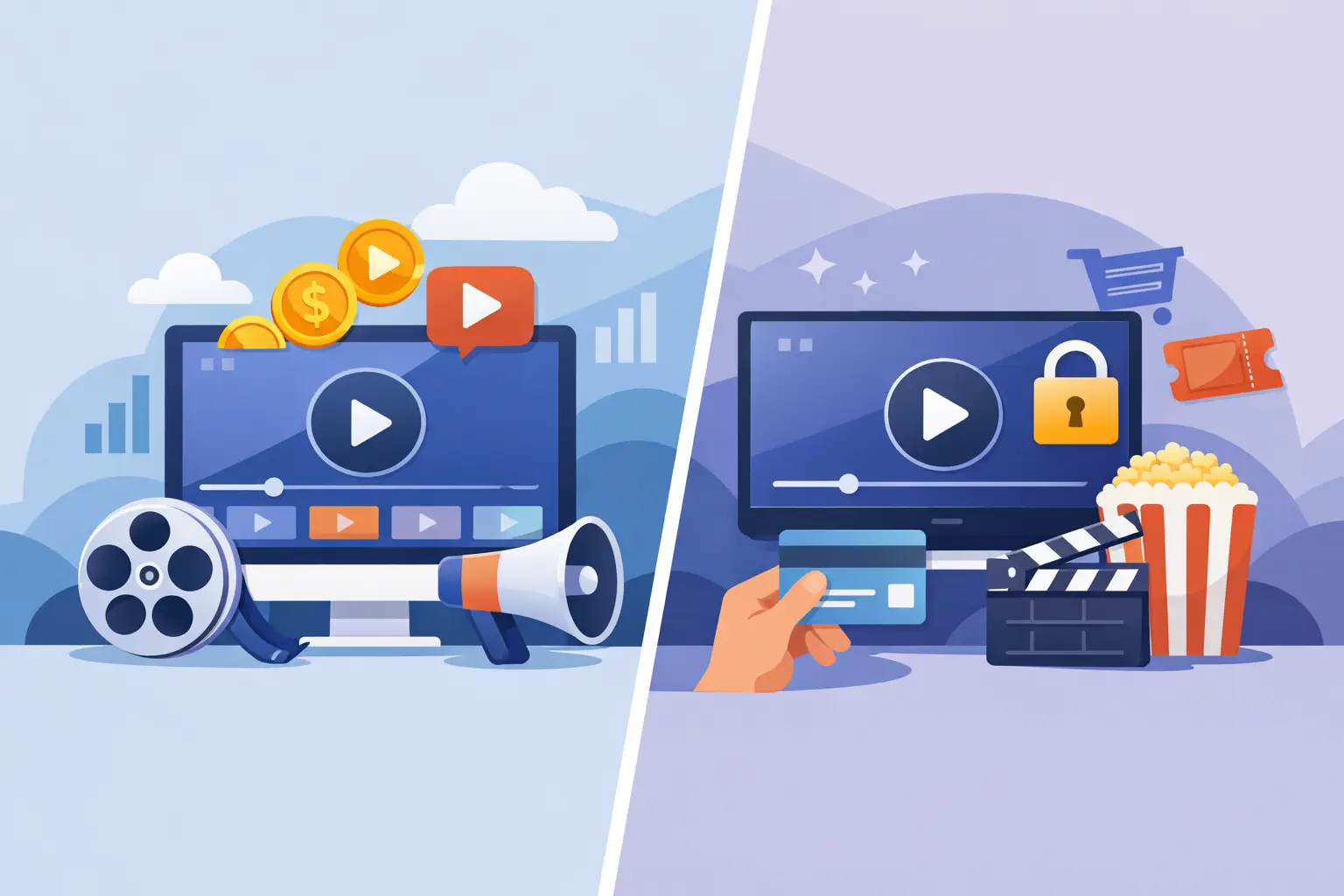
AVOD means advertising-based video on demand. Viewers watch for free, and revenue comes from ads. TVOD means transactional video on demand. Viewers rent or buy the film, and revenue comes from each individual purchase.
On paper, the difference looks simple. In practice, AVOD and TVOD create two very different release strategies.
With AVOD, your biggest advantage is low friction. People do not need to pull out a credit card to hit play. That matters if you are building awareness, trying to reach new viewers, or releasing a film without celebrity cast, studio marketing, or a built-in fan army. Free gets sampled. Sampled gets shared. Shared gets discovered.
With TVOD, the upside is higher revenue per viewer. If someone rents your movie for a few dollars or buys it outright, the return from that single viewer can beat dozens of ad-supported streams. That can be a strong fit for films with a loyal niche audience, timely subject matter, or a marketing engine that already knows how to convert attention into sales.
For filmmakers, the choice affects more than money. It affects discoverability, audience psychology, marketing demands, and how long your title can stay active without burning out your launch.
When AVOD makes more sense
AVOD tends to work best when access is part of the strategy. If your film needs reach before it needs revenue density, free viewing can do a lot of heavy lifting.
This is especially true for emerging filmmakers. If your name is still growing, your first hurdle is often not monetization. It is getting people to care enough to watch in the first place. AVOD removes resistance and gives your film a better shot at finding viewers beyond your immediate circle.
It also fits certain genres better than others. Music docs, cult genre titles, microbudget indies, festival favorites, and films with strong replay or recommendation value often perform well in ad-supported environments. Viewers are more willing to take a chance on something unfamiliar when the cost is zero.
There is another advantage that indie creators should not ignore: AVOD can keep a film alive longer. TVOD launches often depend on a concentrated window. If the early sales push does not connect, revenue can flatten fast. AVOD is usually less front-loaded. It can build over time as the film gets picked up by algorithms, channel programming, word of mouth, and audience behavior across connected TV platforms.
That long-tail value matters when your marketing budget is lean and your release strategy needs room to breathe.
When TVOD is the stronger play
TVOD works best when demand already exists or when your film has a clear reason people will pay now.
Maybe you built an audience during production. Maybe your film covers a hot topic with urgency. Maybe it features talent, a community, or a cause with proven buying behavior. In those cases, asking for a rental or purchase is not unrealistic. It is efficient.
TVOD can also be a smart way to test audience intent. Views are nice. Transactions are clearer. If people are willing to pay, you are learning something powerful about your positioning, your marketing, and the real value of your audience relationship.
For some filmmakers, TVOD is also about brand perception. Charging for the film can signal exclusivity or event status, especially during an early release window. That can help if you are running virtual screenings, community premieres, or direct fan campaigns where the purchase feels like support, not just access.
The trade-off is obvious: friction. Every paid step costs viewers. If your trailer is solid but your awareness is weak, TVOD can limit discovery before your film has a chance to prove itself.
Revenue math is only part of the story
A lot of filmmakers compare AVOD and TVOD by asking which pays more. That sounds practical, but it is incomplete.
TVOD usually pays more per viewer. AVOD usually reaches more viewers. The better model depends on how your audience behaves, not just how platforms calculate revenue.
A film with a devoted niche may earn more on TVOD with a few thousand buyers than it would on AVOD with a broad but casual audience. On the other hand, a film with weak purchase intent but strong mass appeal may underperform on TVOD and find its real life on AVOD.
Marketing costs matter too. TVOD generally asks more from your campaign. You need stronger calls to action, better audience targeting, and a sharper release push. AVOD can be more forgiving because the ask is lighter. Watch for free is easier to market than rent now.
Then there is timing. TVOD can generate faster early cash if the launch lands. AVOD often builds slower but may continue to produce over a longer period. If your project needs immediate recoupment, that matters. If you are building a catalog career, that matters too.
AVOD vs TVOD for filmmakers with limited budgets
If you are self-financing, wearing five hats, and stretching every promo dollar, the model you choose has to match your actual resources.
A lot of indie filmmakers assume TVOD is the more serious option because it puts a price tag on the work. But seriousness does not guarantee results. If you do not have a clear audience acquisition plan, TVOD can turn into a paywall that blocks the exact viewers you need most.
AVOD can be a stronger move for creators who need visibility, proof of audience, and lower-friction discovery. It also plays well with grassroots promotion because every social post, email, podcast mention, or community share has a cleaner message. There is no purchase hurdle to explain.
That said, limited budget does not always mean AVOD. If your audience is small but highly motivated, TVOD can outperform because you are converting depth, not chasing scale. A local documentary with a passionate community may do better selling directly than waiting for ad revenue to accumulate.
The point is simple: budget should shape the strategy, not shame it.
The smartest answer is often both
For many indie releases, this is not really AVOD or TVOD. It is AVOD then TVOD, or TVOD then AVOD, depending on your goals.
A common pattern is to start with TVOD during the highest-interest window, then move to AVOD later to expand reach and extend the life of the title. That gives you a shot at premium early revenue without sacrificing long-term audience growth.
The reverse can also work in certain cases. If your film needs attention first, AVOD can build awareness, social proof, and fan interest that later supports premium screenings, special editions, merchandise, or future projects. Not every title needs to monetize the same way at every stage.
This is where indie-friendly distribution matters. A rigid one-model approach usually serves the platform better than the creator. A flexible release path serves the film.
Platforms that support grassroots filmmakers are getting smarter about this. They understand that creator success is not just about putting a file online. It is about matching monetization to audience reality, platform behavior, and where a film is in its lifecycle. That is the lane where VersusMedia has real value for indie creators who want reach and monetization without handing over control.
How to choose without overthinking it
Start with three honest questions. First, do people already want this film badly enough to pay for it today? Second, is your bigger need revenue now or audience growth over time? Third, can your current marketing actually support a paid conversion campaign?
If the answer to the first and third questions is yes, TVOD deserves a serious look. If the answer to the second is audience growth, AVOD probably has the edge.
Also look at your film itself. Some projects are built for urgency. Others are built for discovery. Some have tight communities ready to show up with wallets open. Others need to be seen before they can be valued.
That is not a weakness. That is distribution reality.
The best filmmakers are not precious about release models. They are strategic. They understand that getting the film watched, talked about, and monetized is a moving target, not a purity test. Pick the model that gives your movie a real shot in the market it actually has - then stay flexible enough to change when the audience tells you more.