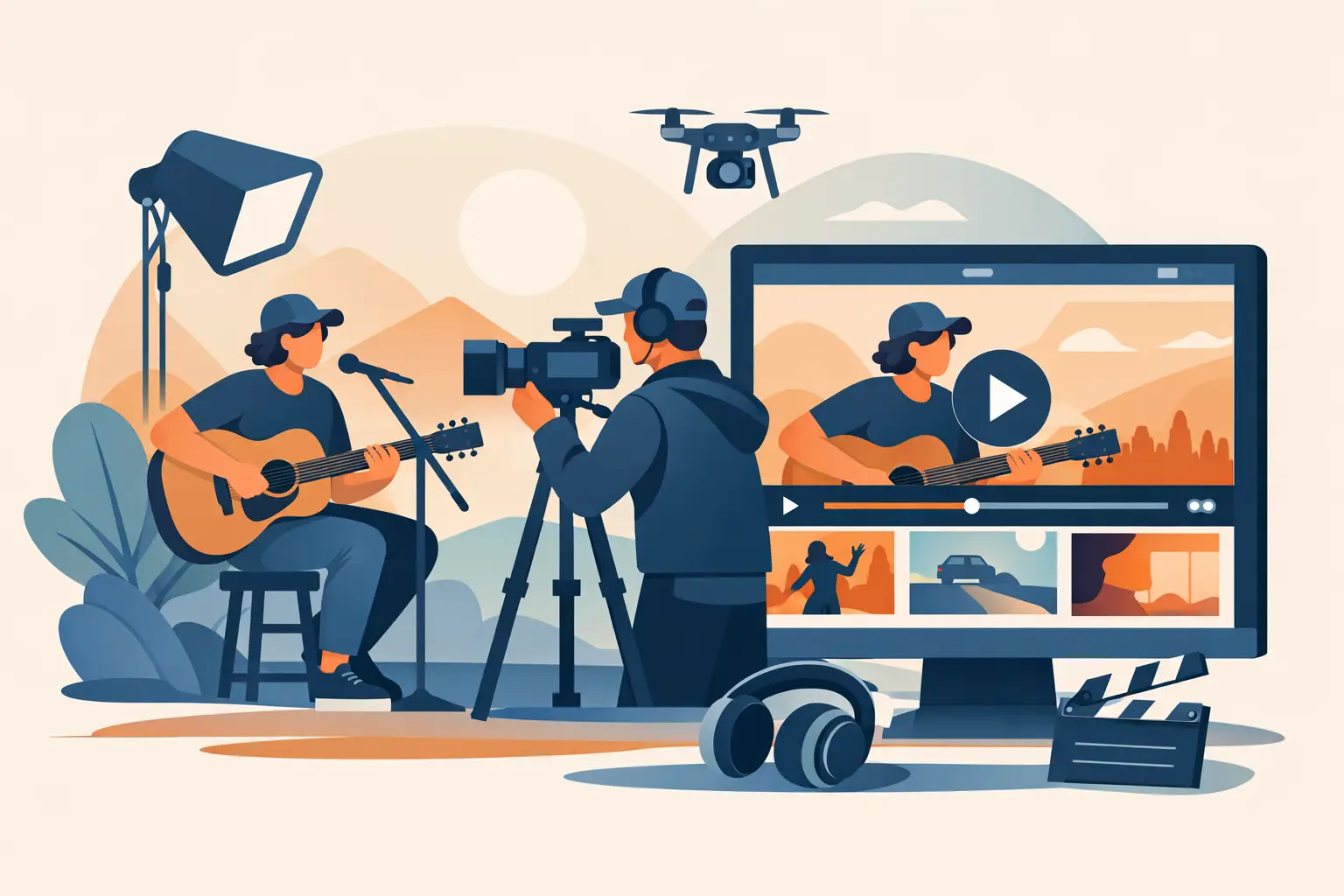
A glossy budget can buy gear, locations, and post-production polish. It still cannot fake a point of view. That is why indie music videos keep punching above their weight. When an artist has something real to say and a director knows how to frame it, the result can feel sharper, stranger, and more memorable than anything built by committee.
For independent artists, music videos are not just promotional extras. They are proof of identity. A strong video tells fans what kind of world the song lives in, what the artist values, and whether this project has a creative pulse worth following. For viewers, that matters. For creators trying to build momentum without a major-label machine, it matters even more.
What makes indie music videos different
The biggest difference is not money. It is control. Indie music videos are usually built closer to the artist, with fewer layers between the idea and the final cut. That creates room for risk, weirdness, restraint, and specificity. Sometimes that means a concept that would never survive a label marketing meeting. Sometimes it means a beautifully simple performance piece shot in one room because the song does not need anything else.
That freedom comes with trade-offs. A smaller budget can limit shooting days, crew size, gear, and locations. Post-production may lean on favors, borrowed tools, or brutal timelines. But those limits often force better choices. When every shot has to earn its place, the work gets more intentional.
The best indie music videos understand this. They do not pretend to be expensive if the concept is not there. They build around a strong visual idea, a distinct mood, or a performance that can hold the frame. Viewers will forgive rough edges. They will not forgive boredom.
Why indie music videos still matter in a short-form era
Short clips move fast, and they absolutely help songs travel. But a full video still does a job that snippets cannot. It gives a track context. It gives fans a deeper entry point. It gives press, curators, and platform programmers a stronger asset to feature. Most of all, it gives the artist a piece of work that can live longer than a trend cycle.
That staying power matters if you are building a catalog instead of chasing one viral moment. A good video can keep attracting viewers months or years after release, especially when the song connects with a niche scene, a local fan base, or a festival audience. It can also travel across more surfaces - streaming platforms, connected TV, video libraries, artist pages, and social cutdowns derived from the main edit.
This is where independent creators have an edge if they think beyond launch week. One well-made video can be repurposed into teasers, live visuals, behind-the-scenes clips, and pitch material for playlists, blogs, and distribution partners. The video is not just content. It is infrastructure for growth.
The real job of an indie music video
A lot of artists ask the wrong question. They ask whether they should make a video. The better question is what job the video needs to do.
Sometimes the job is discovery. You need a visual asset that gives new listeners a reason to stop scrolling. Sometimes the job is brand building. The song is already strong, but the artist image is still blurry, and the video gives shape to it. Sometimes the job is credibility. Booking agents, festival programmers, sync teams, and collaborators take the project more seriously when there is a clear visual standard around the music.
There are also cases where the job is community. A local scene video featuring friends, venues, dancers, or neighborhood landmarks can deepen fan loyalty in a way a slick studio shoot never will. That kind of authenticity is hard to manufacture and easy to recognize.
The mistake is treating every release the same. Not every song needs a narrative epic. Not every artist needs lo-fi handheld chaos. The right format depends on the track, the audience, and the stage of the project.
How the best indie music videos win without huge budgets
They start with concept, not equipment. A weak idea shot on expensive cameras is still a weak idea. A strong idea shot with discipline can carry the whole piece. This is why so many memorable indie videos rely on clear visual rules - one location, one symbolic prop, one performance setup, one strange interruption, one repeated image that gets more powerful each time it returns.
They also know their lane. If the song is intimate, the video should not fight for attention with five disconnected concepts. If the track is chaotic, polished minimalism may flatten it. The visual style needs to amplify the music, not compete with it.
Editing is another separator. Indie teams often cannot outspend bigger productions, but they can absolutely out-edit them. Rhythm, pacing, and image selection do more for impact than most creators think. A smart cut can make a modest shoot feel precise and alive. A bad cut can make great footage feel dead on arrival.
Performance matters too. Some artists are magnetic on camera. Some are not there yet. That is not a moral issue. It is a production reality. The fix is not forcing a performance-heavy concept onto someone who reads stiff on screen. The fix is designing around what actually works - movement, atmosphere, casting, storytelling, abstraction, or controlled framing.
Common mistakes creators make
One of the biggest mistakes is trying to copy a mainstream visual language without the money to support it. Fake luxury, fake grit, fake cinematic scale - audiences read that instantly. The better move is to lean into what is available and make it feel deliberate.
Another mistake is overstuffing the concept. If you only have three minutes, you do not need six unrelated ideas. Pick one core visual direction and push it further. Repetition is not the enemy if it builds mood.
Creators also underestimate distribution. Making the video is only half the job. If it lives in one place with no release plan, no supporting clips, and no path to monetization, it is leaving value on the table. Independent artists need their video assets working across multiple platforms, not sitting idle after premiere day.
Then there is the metadata problem. Bad titles, weak descriptions, missing credits, and no platform-specific formatting can quietly kill reach. It is not glamorous, but it matters. Viewers need to find the work, and collaborators deserve to be attached to it properly.
Where indie music videos fit in a smarter release strategy
A video works best when it is part of a system. That does not mean overcomplicating things. It means knowing how the asset will move.
Start with the full video as the anchor piece. From there, cut shorter versions for social, vertical edits for mobile-first viewing, stills for artwork and promo, and behind-the-scenes content if the shoot had enough texture to support it. If the song is part of an EP or album cycle, think about visual continuity across releases. A recurring color palette, location type, character, or camera style can make a smaller catalog feel bigger and more intentional.
Distribution matters here because audience behavior is fragmented. Some people watch on phones. Others discover music on connected TV, FAST channels, and streaming platforms that look more like digital broadcasting than social media feeds. If you are serious about audience growth, your video should be available where viewers already spend time, not just where you happen to post first.
That is why creator-first distribution platforms matter. They can give indie artists a path from release to visibility to monetization without forcing them into the old gatekeeper model. VersusMedia has built around that reality for years - helping grassroots creators get seen, distributed, and paid while keeping the process accessible.
What viewers actually respond to
Viewers respond to conviction. Not polish by itself. Not trend-chasing. Conviction.
A video can be rough, but if it feels intentional, people stay with it. A video can be simple, but if the mood locks in with the song, people remember it. A video can be technically ambitious, but if there is no emotional center, it disappears fast.
This is good news for independent artists. You do not need to outscale the market. You need to make something that feels true to the music and sharp enough to hold attention. That is a much more reachable target.
It also means audiences are smarter than a lot of industry strategy gives them credit for. People looking for independent music are often looking for work that does not feel sanitized. They want a point of view. They want edges. They want a sense that a real artist made a real choice.
The future of indie music videos
The format is not going away. It is just spreading across more screens, more business models, and more creator-owned pathways. That changes how videos get funded, distributed, and monetized, but it does not change why they matter.
For artists, the opportunity is bigger than making a cool visual. It is building an asset that can support discovery, strengthen identity, open distribution doors, and generate revenue over time. For viewers, it means more access to work that is not filtered through major-label priorities.
If you are making music right now, a video is still one of the clearest ways to show people who you are before they ever read a bio. Make it honest. Make it intentional. Then make sure it can actually reach people.