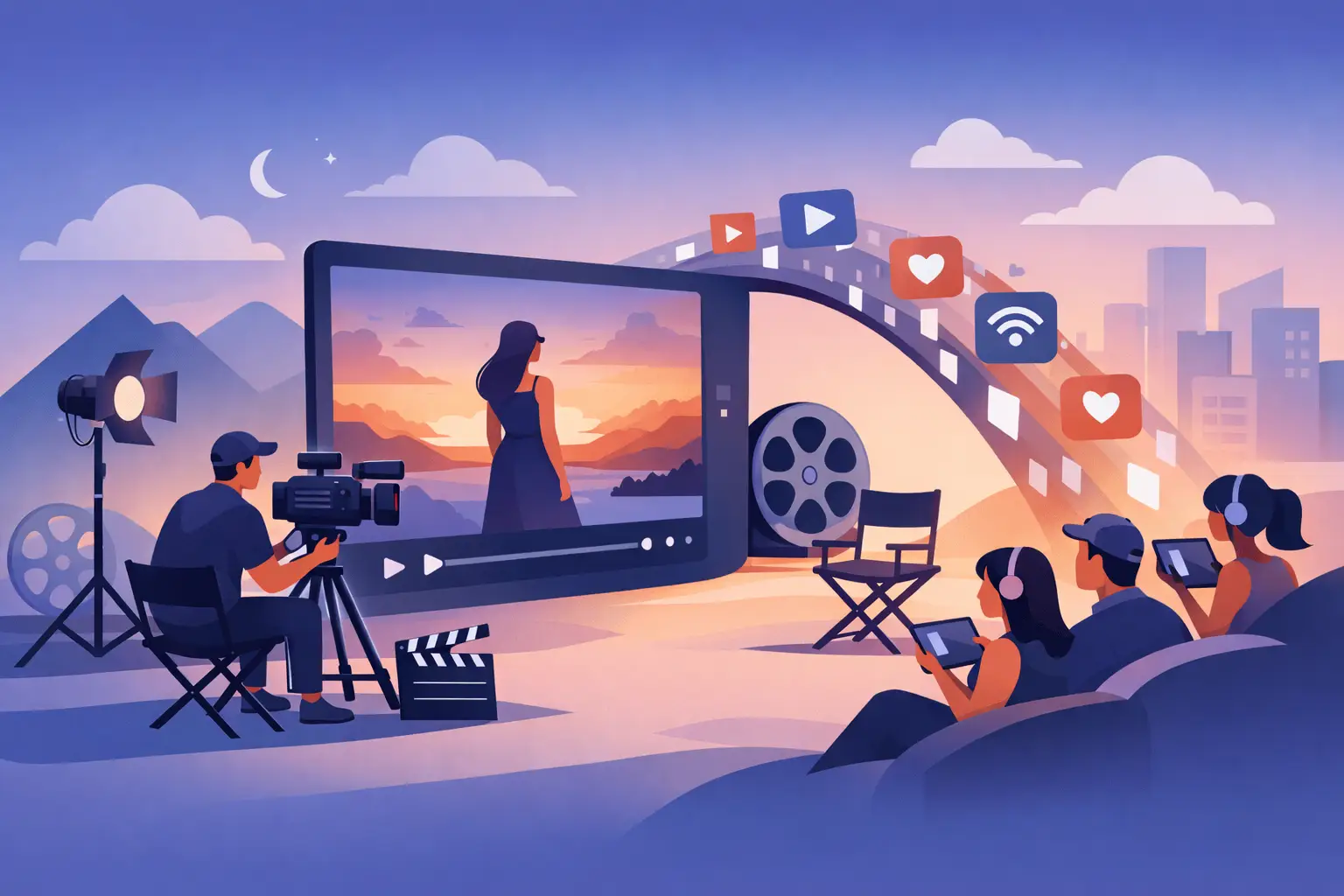
If your watchlist is starting to feel like the same franchise in different costumes, streaming indie films is the fastest way to reset it. Independent film brings risk, personality, and point of view back to the screen. It also gives creators a path to audiences without waiting for a studio, a cable network, or a festival deal to say yes.
That shift matters because streaming changed the rules, but not always in ways that helped independent artists. Big platforms gave viewers endless choice, yet discovery often narrowed around whatever the algorithm could push at scale. For indie filmmakers, getting a film finished was only half the fight. Getting it seen, paid for, and remembered became the real challenge.
Why streaming indie films matters now
Independent film has always lived on hustle. Directors patch together budgets, producers build campaigns from scratch, and festival runs often depend on timing, travel, and luck. Streaming opened a wider door, but it also flooded the room. The upside is obvious: audiences can watch from anywhere, on demand, across Roku, mobile, web, and connected TVs. The trade-off is just as real: access means very little if your film disappears into a giant catalog with no real support.
That is why streaming indie films works best when the platform is built for indie behavior, not just indie inventory. Viewers who seek out independent work are not looking for background noise. They want films with edge, films with local texture, films that do not look focus-grouped into submission. Creators want something just as specific - transparent distribution, affordable access, real audience reach, and payouts that do not feel like an afterthought.
The best indie streaming ecosystems serve both sides. They help audiences find work that feels fresh, and they help creators stay independent after release instead of handing over control to middlemen.
What viewers actually get from streaming indie films
The biggest advantage for viewers is not just variety. It is perspective. Indie films are often where you find regional stories, first-time directors, experimental structure, niche genres, and performances that have not been polished into sameness. You get more risk on screen. Sometimes that means a rough edge. Often, that rough edge is exactly what makes the film memorable.
Streaming also removes the old access problem. You no longer need to live near an art-house theater or track down a limited DVD release. If a platform is designed well, you can move from curiosity to playback in seconds. That convenience matters, especially for younger audiences who already expect entertainment to meet them on every screen they use.
There is a trade-off, though. Indie film discovery still takes intention. Mainstream platforms are optimized for mass appeal, not for cultural depth. If you want the weird documentary, the microbudget thriller, the underground music film, or the regional festival favorite, you need a platform that treats independent media like the main event instead of a side shelf.
The creator side of streaming indie films
For filmmakers, streaming is no longer just a distribution endpoint. It is part of the business model from day one. That changes how creators think about release strategy, audience building, and revenue.
A traditional path might have looked simple on paper: make the film, submit to festivals, hope for a sale, then wait. In reality, that process can be expensive, slow, and brutally uncertain. Streaming offers an alternative, but only if the economics make sense. If a platform takes too much control, buries your title, or pays too slowly, the promise falls apart fast.
A better model gives filmmakers practical leverage. That means direct distribution options, clear reporting, faster royalty payouts, and support for creators working without studio resources. It also means understanding that many indie artists do more than one thing. A director may also be producing music videos. A musician may be building visual content. A festival organizer may need digital access as much as a filmmaker needs shelf space.
This is where modern indie platforms can pull ahead. Instead of acting like closed pipelines, they can function like infrastructure - distribution, audience access, monetization, and creator services in one place. For grassroots artists, that is not a luxury. It is survival.
Streaming indie films and the discovery problem
The hardest part of streaming is not uploading a film. It is getting watched. Discovery is where many independent releases stall out, even when the work is strong.
Some of that comes down to volume. Audiences are overloaded, and every platform is competing for the same limited attention. Some of it comes down to design. If recommendation engines only reward scale, familiar names, or high ad spend, indie work starts at a disadvantage.
That is why curation still matters. So does context. Viewers are more likely to watch a film when it is placed within a recognizable lane - festival selections, music-driven cinema, regional storytelling, genre collections, or creator spotlights. Discovery gets easier when platforms organize around how people actually browse, not just around whatever metadata is easiest to sort.
For creators, the lesson is straightforward: distribution without discoverability is not enough. A listing is not a launch. Platforms that understand indie audiences should help close that gap with better programming, smarter packaging, and channel-based exposure that keeps films circulating instead of vanishing after release week.
Where FAST channels fit in
FAST channels - free ad-supported streaming television - changed the conversation by making free viewing feel premium again. For viewers, that means easy access without another subscription. For indie media, it means a chance to meet audiences where they already are, especially on connected TVs.
This format works particularly well for music content, festival programming, and films that benefit from passive discovery. Someone may not search for a title directly, but they will stop scrolling if a channel is consistently programmed with work that feels different from the usual rotation. That creates a new entry point for indie film fans who are tired of paying more for the same recommendations.
For creators, FAST is not a magic fix. Ad-supported models depend on inventory, audience retention, and platform fit. Some films perform better on demand than in channel environments. Others gain value from both. The smart move is not treating one format as the answer to everything. It is building a release strategy that matches the title, the audience, and the revenue goal.
What a strong indie platform should offer
If you are a viewer, the basics are simple. You want a catalog that feels alive, apps that work, and programming that helps you find something worth watching fast. If you are a creator, the checklist gets more specific.
A strong platform for streaming indie films should lower friction, not add to it. That means broad device access, flexible distribution, useful data, and monetization tools that do not require a legal team to decode. It should also respect the reality that many independent creators operate on thin margins and tighter timelines.
This is why platforms like VersusMedia stand out in the grassroots lane. They are not just hosting content. They are building a path for filmmakers, musicians, and festivals to reach audiences, stream across modern devices, and get paid without waiting around for gatekeepers to catch up. That combination matters because indie creators do not need more prestige theater. They need practical momentum.
The future of streaming indie films
The next phase is not about copying the major platforms with smaller budgets. It is about doing what they do not. More direct creator relationships. Faster payments. Better support for hybrid artists. Smarter festival streaming. More room for niche communities to form around actual taste instead of generic popularity.
There is also a wider cultural upside. Independent film has always been where new voices break through before the rest of the industry notices. When streaming platforms support those voices early, audiences get better work and creators get a more realistic shot at building a career on their own terms.
Not every indie film will find a massive audience. Not every platform will be the right fit for every project. But the old model of waiting for permission is losing its grip. That is good news for viewers who want something real and for creators who are done asking the system to make room.
If you care about original stories, streaming indie films is not a side quest. It is where the next wave starts.