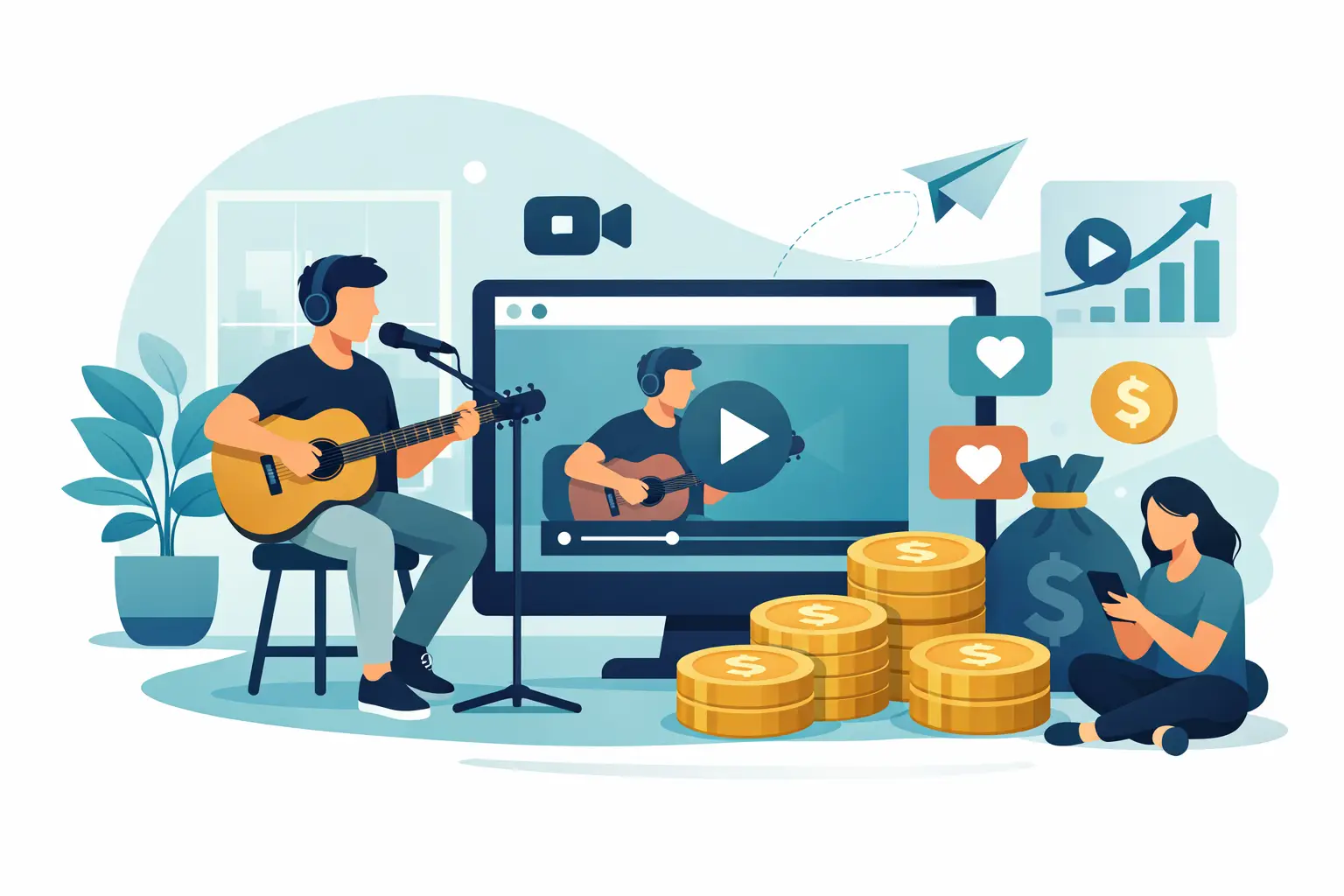
A lot of artists spend months getting a music video made, then upload it once, post a few clips, and hope the views turn into money. Usually, they do not. If you want to learn how to monetize music videos, you need a distribution plan, multiple revenue paths, and a clear sense of where your audience actually watches.
That matters even more for indie artists. You are not sitting on a major-label marketing budget, and you probably do not have time to waste on channels that look impressive but pay almost nothing. The good news is that music video monetization is no longer limited to one platform, one ad program, or one gatekeeper. You can build income from ads, licensing, streaming placements, direct fan support, and platform payouts if your setup is smart.
How to monetize music videos starts with the rights
Before you think about revenue, make sure you actually control what can be monetized. A music video can involve more rights than artists expect: the master recording, composition, performance rights, featured talent releases, location permissions, artwork clearances, and any third-party footage or samples.
If one piece is not cleared, the entire revenue chain can get blocked. Ad monetization can be denied. Distribution can be delayed. Licensing deals can fall apart during review. That is why rights management is not paperwork for later. It is the foundation of getting paid.
For DIY artists, this usually means keeping clean split sheets, obtaining on-camera releases, documenting who owns the song and recording, and avoiding borrowed visuals you cannot prove you have the right to use. If your video includes branded products, stock clips, or a beat with unclear ownership, fix that first. Revenue follows ownership.
The biggest mistake: relying on one platform
A lot of advice about how to monetize music videos starts and ends with YouTube. YouTube matters, but it should not be your whole strategy.
Ad revenue on a single platform is unpredictable. Rates change. Eligibility changes. Watch time can be strong while payout stays weak. And if your audience is niche, independent, or more active on connected TV than desktop, you may be leaving money on the table by staying in one lane.
A better approach is to treat your music video as a monetizable asset, not just a post. That means distributing it across the places where ad-supported streaming, curated programming, and platform royalties can continue working after the first release week.
For indie creators, this is where a platform built around grassroots distribution can make a real difference. VersusMedia, for example, focuses on getting independent film and music content into ad-supported streaming environments while supporting creators with direct distribution and daily royalty payouts. That model is a lot closer to how indie artists actually need to operate: lean, fast, and built for repeat revenue instead of one upload and a prayer.
Ad-supported streaming is real revenue, not filler
If your music video is only living on social feeds, you are asking short-form discovery to do the job of long-term monetization. Social clips are useful for attention. They are not the whole business.
Ad-supported video streaming gives you a better shot at ongoing earnings because the content can keep generating views in a programmed environment. FAST channels, on-demand libraries, mobile apps, web players, and connected-TV platforms all create more surfaces for your video to be discovered and watched. More importantly, they can create monetizable watch time outside the constant churn of social algorithms.
This works especially well for artists with a catalog, a distinct visual identity, or strong genre fit. A single video can struggle on a broad platform but perform well when placed in a curated indie, regional, or culture-specific environment. Context changes value.
There is a trade-off, though. Ad-supported streaming usually rewards consistency more than random spikes. One viral moment can help, but steady distribution often beats a one-week burst. If you want durable income, think library, not lottery ticket.
Licensing can outpay ads, but only if your video is usable
One of the strongest answers to how to monetize music videos is licensing, but many artists misunderstand what gets licensed. In some cases, a supervisor wants the song, not the full video. In others, the video itself becomes useful as promotional content, background media, festival programming, channel packaging, or branded distribution.
For that to happen, your asset needs to be clean and professional. If your video opens with a long logo animation, contains uncleared fashion marks, or includes dialogue you do not own, it becomes harder to place. If you have multiple deliverables, including clean versions, captioned versions, and high-resolution masters, you become easier to work with.
Licensing also depends on fit. A raw handheld performance video may be perfect for one editorial or streaming environment and useless for another. A polished concept video may attract more commercial opportunities but cost far more to make. There is no universal best style. The better question is whether your video was built with reusable value in mind.
Direct fan payments work best when the ask is specific
Fans will support artists directly, but not because a generic donate button exists. Direct monetization works when viewers know what they are funding and why it matters.
If your music video launch is tied to a limited drop, behind-the-scenes access, early release, exclusive cut, or community goal, support feels connected to something real. That can happen through subscriptions, paywalled extras, tipping, or newer payment rails like instant micropayments. The key is clarity.
This method will not replace all other income streams for most artists. It is strongest when paired with distribution, not used as a substitute for it. Think of fan support as high-margin revenue from your most engaged audience, while ad-supported streaming and licensing cover scale.
How to monetize music videos with a catalog mindset
The artists who earn the most from video usually stop thinking in single releases. They build a system.
A catalog mindset means every music video supports more than one outcome. It can drive ad revenue, feed clips to social channels, strengthen your artist brand, increase your streaming consumption, attract festival or channel placements, and create assets for future licensing. One video should lead to five or six usable pieces, not one premiere and silence.
This also changes how you budget. Spending $8,000 on a video that looks great for three days and earns nothing afterward is a bad deal. Spending $3,000 on a video package that includes alternate edits, vertical cutdowns, captions, thumbnails, a clean master, and distribution-ready files can produce better long-term return.
Indie artists need to be ruthless here. Production value matters, but monetization-friendly production matters more. A slightly less flashy video that is fully owned, widely distributable, and easy to repackage can beat an expensive shoot loaded with rights problems.
Metadata, packaging, and placement decide more than artists think
Great music videos still get buried because the packaging is weak. Title formatting, genre tags, artist metadata, thumbnails, descriptions, captions, and delivery specs all affect where your video ends up and whether platforms can program it properly.
This is not glamorous, but it is one of the clearest differences between content that earns and content that sits. Platforms need to understand what your video is, who it is for, and where it belongs. If you are vague, missing key metadata, or delivering the wrong files, you make discovery harder from day one.
Placement matters too. A video paired with the right genre collection or indie channel can outperform a better video dropped into the wrong environment. Distribution is not just about being available. It is about being positioned.
What actually makes a music video monetizable
If you strip away the hype, monetizable music videos usually share a few traits. They are fully cleared. They match a recognizable audience or scene. They are delivered in multiple usable formats. They live on more than one platform. And they keep working after release week.
That last point is where most artists lose momentum. They treat a music video as marketing spend instead of revenue infrastructure. Once you shift that mindset, your decisions get better. You ask smarter questions about ownership, distribution, packaging, and payout speed. You stop chasing vanity metrics and start building assets that can actually return cash.
There is no single formula for how to monetize music videos because every artist has different leverage. Some have strong fan communities. Some have sync-ready songs. Some have niche visuals that fit perfectly into ad-supported streaming channels. The move is not choosing one path and hoping. The move is stacking the paths that fit your catalog, your budget, and your audience behavior.
Make the video, yes. But build the machine around it. That is where indie artists stop posting content and start creating revenue.