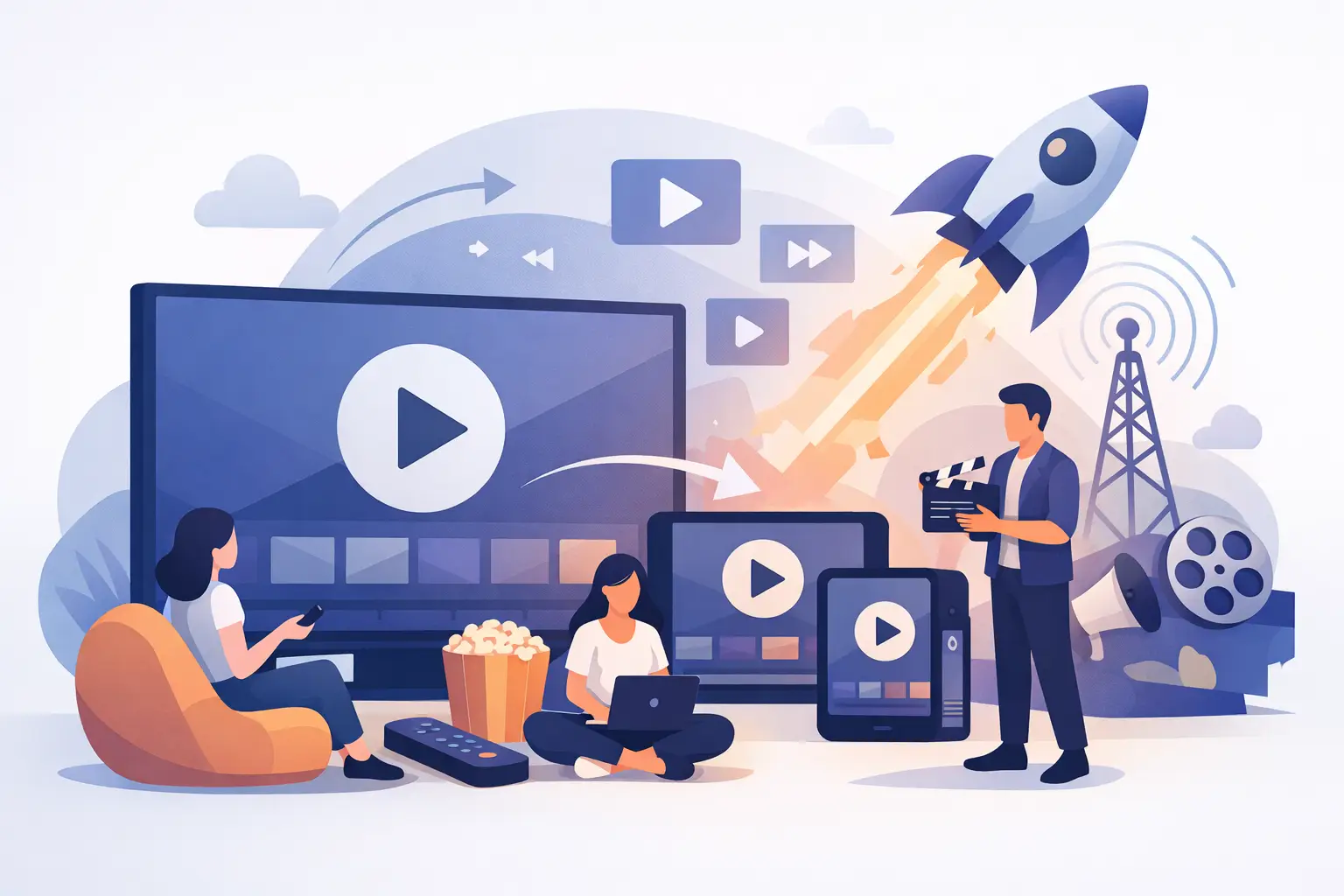
A few years ago, getting a film or music catalog onto TV usually meant gatekeepers, licensing delays, and budgets most indie creators did not have. FAST channels changed that. They gave independent media a real shot at living where audiences already watch - on connected TVs, mobile apps, and streaming platforms built for lean-back viewing.
For viewers, that means free programming without the friction of another subscription. For creators, it means something bigger: a distribution model that can keep content in circulation, surface deep catalogs, and generate ad-supported revenue without asking artists to give up control. That is why FAST channels matter right now, especially if you care about independent film, music, and festival content that rarely gets fair placement in mainstream entertainment.
What FAST channels actually are
FAST channels stands for free ad-supported streaming television. The idea is simple: viewers tune into scheduled streaming channels for free, and ads fund the experience. It feels familiar because it borrows from traditional television, but the delivery is digital, flexible, and built for modern streaming behavior.
That mix is what makes the format work. On-demand streaming trained people to pick exactly what they want, but a lot of viewers still like being able to turn something on and let it play. FAST channels remove decision fatigue. Instead of scrolling through endless tiles, the viewer lands in a programmed experience.
For indie media, that programming layer is not a small detail. It is the difference between a film sitting unseen in a library and a film being placed inside a channel where it can actually be discovered.
Why FAST channels work so well for indie audiences
Independent viewers do not watch like passive mass-market audiences. They are often looking for a mood, a scene, a subculture, or a point of view. A well-programmed FAST channel can serve that far better than a generic catalog page.
Think about the difference between searching for one title and dropping into a stream of underground music videos, festival-selected shorts, experimental docs, or late-night cult films. One is a transaction. The other is a discovery engine.
That matters because indie content often wins on context. A viewer may not know a filmmaker's name yet. They may not search for a niche band on purpose. But they will stay if the programming is sharp and the channel identity feels curated instead of random.
FAST channels also fit the way connected-TV audiences behave. TV screens are still the strongest environment for long-form viewing, but they are also where people want low-friction entertainment. Free access, familiar channel structure, and ad-supported viewing lower the barrier fast.
FAST channels vs on-demand libraries
This is not an either-or situation. The strongest streaming businesses use both.
An on-demand library is great for search, replay value, and intentional viewing. A FAST channel is great for discovery, passive consumption, and keeping audiences engaged longer. If you only offer on-demand, you rely heavily on users to know what they want. If you only offer linear channels, you limit choice.
Used together, the two models support each other. A viewer discovers a director through a FAST channel, then goes into the library to watch more. Or they find a title on demand, finish it, and move into the live channel experience. That loop can be powerful for independent catalogs that need more than one shot at audience attention.
For creators, this combination also creates more surface area for monetization. A title can earn value from placement, repeat programming, catalog visibility, and audience spillover into other works.
Why creators should pay attention to FAST channels
If you are a filmmaker, musician, or festival organizer, FAST channels are not just another buzzword in streaming. They solve a real problem: indie work often disappears after release.
A film premieres, gets a burst of attention, then falls into the digital void. A music video drops, gets some social traction, then loses momentum. Festival programs create excitement for a few days and then vanish. FAST channels help extend that lifecycle.
Because programming is ongoing, content can be resurfaced again and again. That gives catalog work more breathing room. It also gives creators a better chance to build cumulative audience growth instead of depending on one launch window.
There is a trade-off, though. FAST is not magic. Ad-supported revenue depends on audience scale, session length, geography, ad fill, and platform distribution. A niche title with weak packaging will not suddenly perform just because it is on a channel. Programming, metadata, artwork, timing, and platform fit still matter.
But compared with old-school distribution models that locked indie creators out or buried them under opaque reporting, FAST channels offer a more realistic path. They let independent work compete in the actual places people spend time.
What makes a good FAST channel
Not every channel deserves to exist. The best FAST channels have a clear identity, consistent programming logic, and enough depth to keep viewers watching.
A strong channel usually starts with a recognizable angle. That could be indie horror, global festival winners, music documentaries, underground performance, or creator-driven short films. Broad and vague usually loses. Specific and well-curated tends to win.
Programming rhythm matters too. If the lineup feels repetitive or chaotic, viewers bounce. If it feels intentional, the channel starts to build habit. This is where indie platforms have an edge. They can program with taste instead of trying to flatten everything into broad-market content.
Presentation counts as well. Clean scheduling, strong visual branding, and smart title rotation make a channel feel alive. Audiences may come for free access, but they stay because the experience feels like someone actually cared about what was put on screen.
Why FAST channels are a real opportunity for indie platforms
Major media companies jumped into FAST because they saw a way to monetize back catalogs and capture ad dollars from cord-cutters. That part is obvious. What is more interesting is what FAST channels do for independent platforms.
They create a lane where curation can beat scale.
Big services can flood the zone with content, but indie platforms can build sharper communities around genre, culture, and creator identity. That is a serious advantage when your audience is not looking for generic entertainment. They want something with a point of view.
This is where a platform like VersusMedia fits naturally. If you already support independent film and music across free streaming, creator distribution, and connected-TV access, FAST channels become more than a programming format. They become part of a larger creator economy strategy. A film can be distributed, programmed, monetized, and rediscovered inside one ecosystem instead of being fragmented across disconnected services.
That model matters for underrepresented creators. It reduces friction. It creates more ways to get seen. It also gives platforms more reasons to invest in emerging talent because the value of a project does not end after a single release window.
The business side is promising, but not simple
There is real momentum behind FAST, but it is worth being honest about the limitations.
Ad revenue can be uneven. Platform rules change. Discoverability is still competitive. Not every niche has enough audience depth to support a standalone channel, and not every creator is ready for the metadata, deliverables, and rights management that streaming requires.
Still, the direction is clear. Free streaming is not the budget version of entertainment anymore. It is becoming a core part of how audiences watch. As subscription fatigue grows, FAST channels look less like an experiment and more like a durable habit.
That shift is especially relevant for indie media because independent audiences are already comfortable finding content outside the mainstream bundle. They follow scenes, not just studios. They care about access, curation, and authenticity. FAST plays directly into those habits.
What viewers and creators should do next
If you are a viewer, pay attention to the channels that feel programmed with intention. The best FAST experiences are not just free. They introduce you to work you would not have searched for on your own.
If you are a creator, think beyond a one-time release. Ask where your catalog lives after launch. Ask whether your work can benefit from repeat scheduling, themed placement, and ad-supported exposure on the devices people actually use every day.
FAST channels are not replacing every other model in streaming, and they should not. On-demand still matters. Direct sales still matter. Festivals still matter. But for indie film and music, FAST creates something the market has needed for a long time: a practical middle ground between invisibility and expensive gatekept distribution.
That is the real opening here. Not hype. Not trend-chasing. Just a better shot for strong independent work to stay in front of real audiences long enough to matter.
The creators who move early, package their catalogs well, and meet viewers where they already watch will have an edge - and that edge is starting to look a lot like the future of indie streaming.