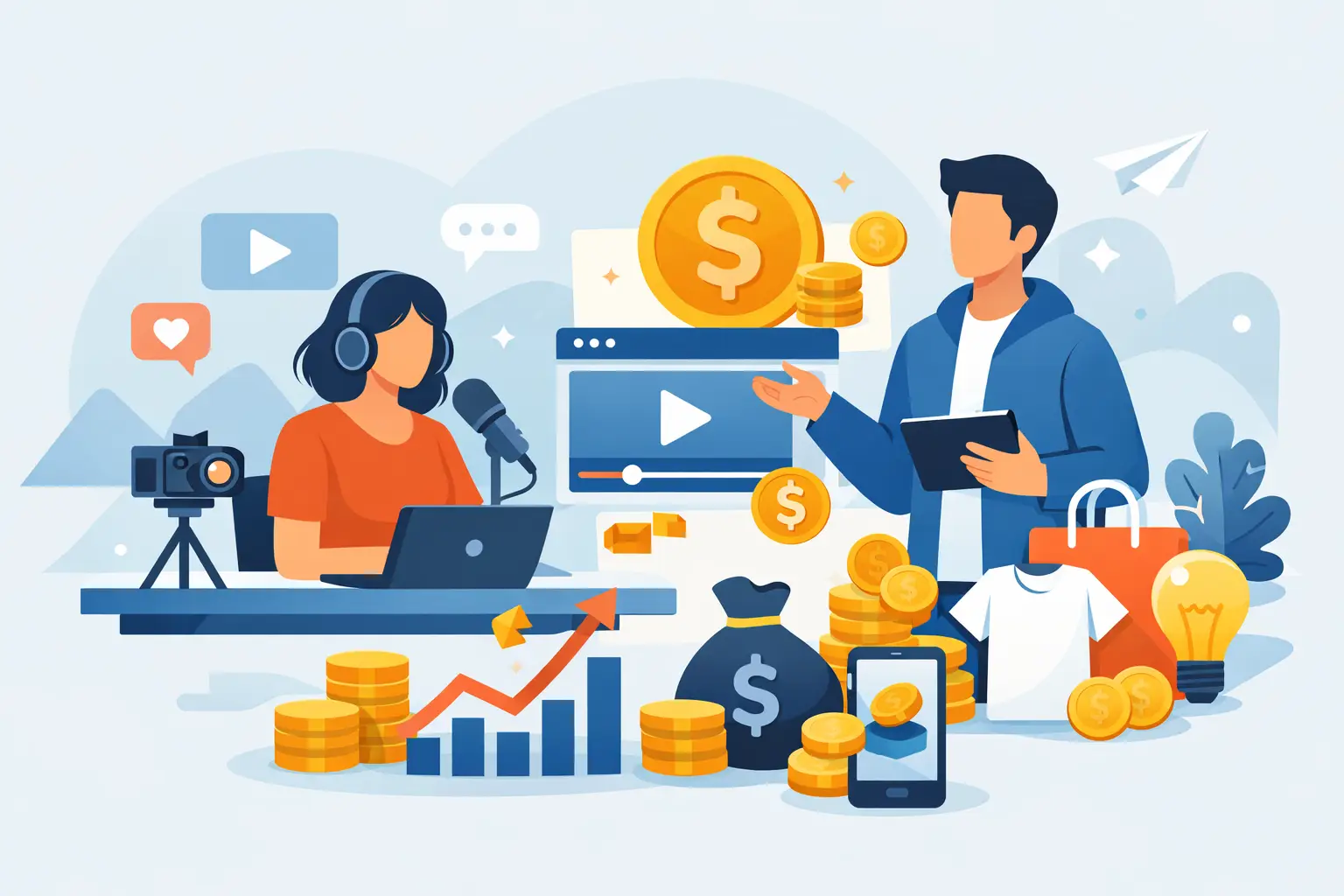
Most creators do not fail because the work is weak. They fail because the money map is vague. A solid creator monetization guide fixes that. If you are an indie filmmaker, musician, or festival organizer, the real question is not whether your content can earn. It is whether you have built enough revenue paths around it to keep going.
That distinction matters. One upload, one launch, or one release window is rarely enough. Indie media monetization works best when it stacks. Ad revenue, transactional access, royalties, sponsorships, direct fan support, licensing, and platform payouts all play different roles. The smartest creators stop asking, "What is my monetization model?" and start asking, "Which mix fits my audience, release strategy, and budget right now?"
A creator monetization guide starts with the right model
There is no single best way to monetize creative work. A short film headed to festivals has different options than a catalog of music videos. A niche documentary with a loyal audience can often outperform a broader title with weak audience targeting. Monetization depends on format, audience behavior, release timing, and how much control you want to keep.
For many indie creators, ad-supported streaming is the easiest entry point because it lowers friction. Free access gets more viewers in faster, which can matter more than charging upfront when discoverability is the bigger problem. But ad revenue alone is rarely enough unless you have scale. That is the trade-off. You gain reach, but the payout per viewer can be modest.
Transactional models - rentals, purchases, ticketed streams, premium access - can work better when your audience already knows why they should care. Fans will pay when the offer feels exclusive, timely, or community-driven. A festival stream, early release, bonus cut, or event screening can create that urgency. The downside is obvious: if awareness is low, paid access can shrink your potential audience before momentum has time to build.
Then there is direct support. Tips, memberships, fan subscriptions, and newer payment rails can make a real difference, especially for creators with a committed niche. Direct payments usually produce stronger margins because fewer layers sit between the creator and the audience. But direct support requires trust and consistent communication. It rewards creators who treat audience relationships like an ongoing asset, not a one-time campaign.
The real goal is revenue layering
Most indie creators need more than one lane. That is the practical core of any creator monetization guide worth using. Monetization gets stronger when each revenue source covers a different weakness.
Ad-supported streaming helps with reach. Royalties create recurring income over time. Direct payments give your most engaged supporters a fast way to contribute. Festival and event packages create concentrated revenue spikes. Licensing can add upside that is hard to predict but worth pursuing. When those channels work together, you are not depending on one platform, one algorithm, or one launch weekend.
This is where too many creators leave money on the table. They release a project, post a trailer, maybe collect a few views, and then move on. Meanwhile, the same asset could be earning in multiple formats if it were packaged correctly. A film can play in a festival stream, live on ad-supported channels, support soundtrack promotion, and drive direct fan payments. A music video can function as content, marketing, and monetizable inventory at the same time.
That does not mean every creator needs a giant distribution machine. It means each release should be designed with a revenue stack in mind.
Match your monetization to the stage you are in
Early-stage creators usually need exposure first and margin second. That can feel frustrating, but it is reality. If almost nobody knows your work, the fastest path to revenue is often growing audience access through free or low-friction distribution while collecting data on what performs. Which titles hold attention? Which clips get replayed? Which audience segment shows up more than once? Those signals tell you where to place your paid offers later.
Mid-level creators have different leverage. If you already have returning viewers, a mailing list, festival credibility, or a catalog, you can be more selective. This is where windowing gets useful. You might launch with a premium event or exclusive access, then expand into ad-supported distribution to widen reach. That sequence lets you capture your highest-intent audience before moving into scale mode.
Established indie brands can go further by monetizing the ecosystem around the content. That might include sponsorship integration, white-labeled festival streaming, premium fan experiences, educational licensing, or cross-promoting related releases inside a catalog. At that point, the project is not just a title. It is an operating asset.
Distribution is part of monetization, not separate from it
A lot of creators think of distribution as the final step. It is not. Distribution choices directly affect earnings. Where your content appears, how easy it is to watch, what devices it supports, how quickly royalties move, and whether your audience can pay you directly all shape the actual outcome.
Connected TV matters here more than many creators realize. Viewers increasingly watch indie film and music content on Roku, mobile, web, and smart TV environments, not just laptops. If your content is hard to access where people already consume media, monetization gets weaker before the audience even has a chance to respond.
The same goes for payout structure. Slow royalty cycles can crush momentum for indie creators operating on thin budgets. Faster payouts give creators room to promote harder, reinvest sooner, and make decisions with real numbers instead of hope. That is why platforms built for independent creators, not just mass-market catalogs, often create a better monetization environment even if the brand is smaller.
VersusMedia has leaned into this reality by combining free streaming exposure, creator distribution, and daily royalty payouts for the indie market. That kind of setup matters because access, monetization, and timing all affect whether a creator can keep producing.
Your audience is not one audience
Another mistake in creator monetization is treating everyone the same. Casual viewers, loyal fans, festival audiences, and industry buyers do not behave alike, so they should not all get the same offer.
Casual viewers respond to convenience. Free access, strong thumbnails, clean metadata, and platform availability do most of the work. Loyal fans are different. They are more likely to pay for exclusives, merch bundles, live access, or direct support because they want proximity, not just content. Festival audiences care about curation and event context. Industry buyers care about fit, rights, and audience validation.
When creators flatten those groups into one strategy, results get muddy. When they segment the offer, revenue usually improves. The point is not to complicate your operation. The point is to stop asking one piece of content to do one job for everyone.
New payment options are opening new lanes
Independent creators have always been underserved by traditional payment systems. High fees, long wait times, minimum thresholds, and platform gatekeeping all eat into already thin margins. That is why alternative payments are gaining traction.
Faster digital payment systems, including Bitcoin Lightning-based options, are not just a tech flex. For some creators, they can reduce friction and support more immediate fan-to-creator transactions. That is especially useful for global audiences, micro-payments, and direct support models where speed matters. It will not replace every revenue source, and not every audience is ready for it, but it expands what is possible.
The smart move is not chasing every new tool. It is choosing payment options that match your audience and remove friction instead of adding it.
What to build next
If your monetization feels inconsistent, start smaller than you think. Do not rebuild your entire business in one week. Pick one release and map it across three stages: audience access, revenue event, and long-tail earnings. Maybe that means free streaming for reach, a ticketed online premiere for core supporters, and royalty-based distribution after launch. Maybe it means pairing a film release with soundtrack monetization and direct fan payments. Maybe it means turning a festival into a streaming package that keeps earning after the in-person dates end.
The key is movement. Creators get stuck when they wait for the perfect model. There is no perfect model. There is only a better fit for this stage, this project, and this audience.
A good creator monetization guide should leave you with one clear idea: your work deserves more than a single shot at revenue. Build the stack, keep the rights that matter, and make it easier for people to watch, support, and come back for the next release.