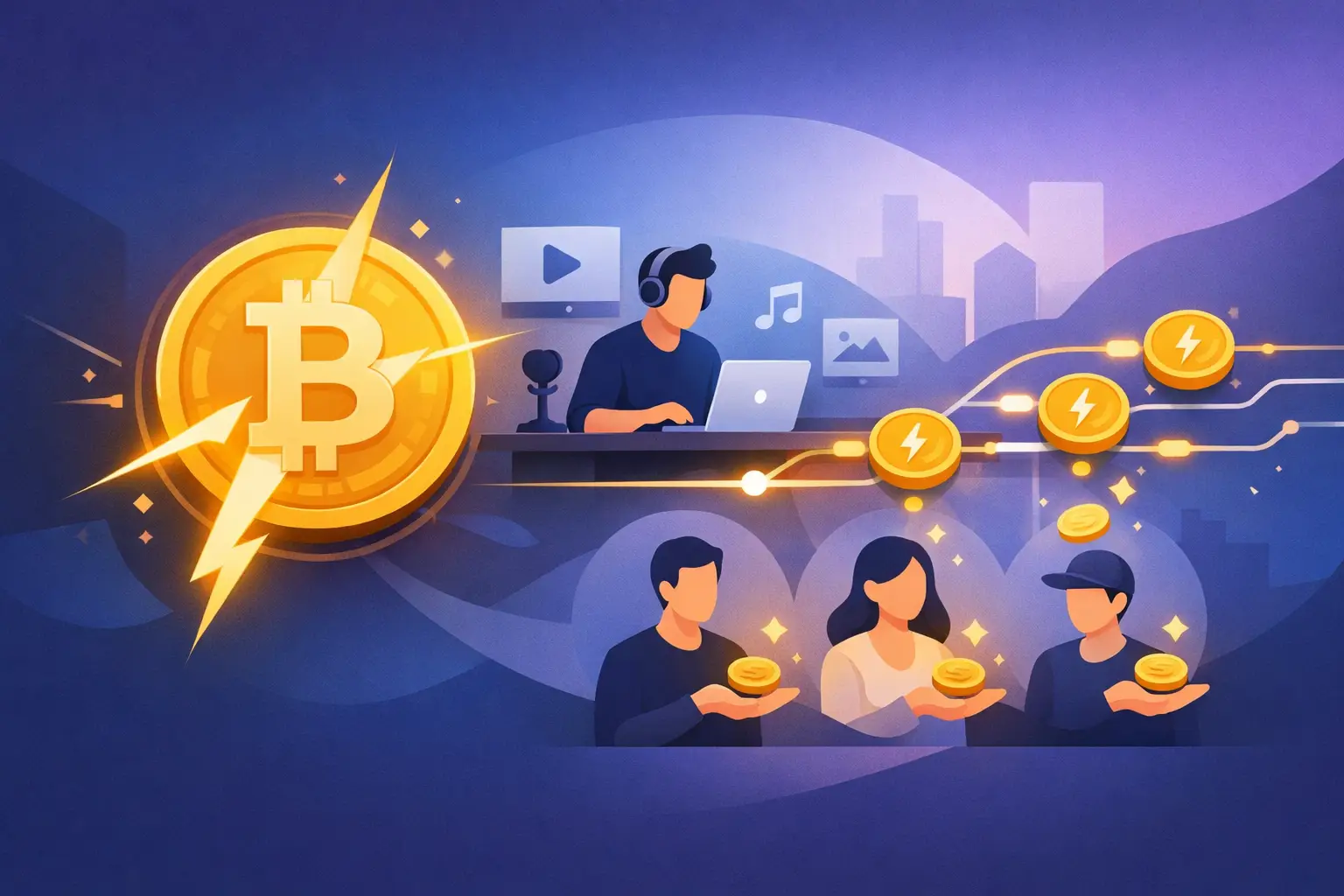
A royalty payment that shows up days or weeks late can throw off an entire indie release plan. If you're a filmmaker, musician, or festival organizer working lean, timing matters just as much as the amount. That is why Bitcoin Lightning creator payouts are getting real attention from independent media platforms and creators who are done waiting around for old payment rails to catch up.
What Bitcoin Lightning creator payouts actually mean
At the simplest level, Bitcoin Lightning creator payouts use the Lightning Network, a payment layer built to move bitcoin quickly and at very low cost. For creators, that changes the payout experience from batch-based and delayed to something much closer to instant or near-instant settlement.
That matters because traditional creator payments are often full of friction. Platforms may hold earnings until a threshold is met. Banks can slow things down. Cross-border payments can shrink after fees. And if you are trying to fund promotion, pay collaborators, or cover production costs, a payout that arrives late is not a small issue. It can affect the next release.
Lightning does not erase every challenge, but it changes the speed and structure of payment. Instead of waiting for a transfer to clear through multiple intermediaries, creators can receive funds directly to a Lightning-enabled wallet. For indie artists used to patching together revenue from streaming, direct support, and licensing, that kind of speed is not a gimmick. It is operationally useful.
Why indie creators care about payout speed
Big studios can absorb delays. Most indie creators cannot. If you are self-funding a short film, rolling revenue from one music release into the next campaign, or managing a festival with tight margins, cash flow is the engine. Slow payouts create drag.
Fast payouts help creators move faster on the things that actually grow a career. That could mean booking color correction, paying a sound mixer, launching ad spend, submitting to additional festivals, or simply covering rent while a release gains traction. Daily or on-demand access to earnings gives creators more control over timing, and control is one of the few real advantages indie artists can build into their business.
This is where Bitcoin Lightning creator payouts stand out. They reduce the lag between monetization and access. Instead of treating payment as a back-office afterthought, they turn it into part of the creator workflow.
The case for Lightning in media payouts
The Lightning Network fits creator payouts for a simple reason: media monetization is often fragmented and frequent. A creator might earn small amounts across many plays, views, or transactions. Traditional payment systems are not always designed well for that pattern, especially when fees eat into smaller balances.
Lightning is built for smaller, faster transactions. That makes it a strong match for digital media platforms serving independent creators, where revenue can arrive in many increments rather than one large check.
There is also a global angle. Independent film and music are not limited by borders, but banking systems still are. If a platform has creators and audiences in different regions, moving money through legacy payment channels can get expensive and slow. Lightning gives platforms another route, one that is native to the internet and not tied to business hours or country-by-country banking friction.
For grassroots creators, this is not about chasing hype. It is about building a monetization stack that matches how digital distribution actually works.
Where the trade-offs show up
Let us keep it real. Bitcoin Lightning creator payouts are not automatically the best choice for every creator, every time.
The first trade-off is familiarity. Not every filmmaker or musician wants to think about wallets, invoices, or managing digital assets. Some creators want a bank deposit and nothing else. That is a fair preference, especially for artists who already have enough technical overhead in production and distribution.
The second trade-off is price volatility. If a payout is received in bitcoin and held in bitcoin, the value can move. Some creators are comfortable with that. Others are not. Whether Lightning feels like an advantage depends partly on whether the platform gives creators flexibility around how they receive and manage funds.
The third issue is education. Fast money sounds great, but creators still need clear onboarding. If the payment process is confusing, adoption drops. A platform can have cutting-edge payout infrastructure, but if artists do not understand how to use it, the feature stays niche.
That is why the best implementation is practical, not flashy. Clear setup. Clear payout instructions. Clear expectations.
How Bitcoin Lightning creator payouts can fit a working artist's stack
For many creators, Lightning will not replace every payout method. It will sit alongside existing options and serve specific use cases better.
If you want immediate access to earnings from streaming activity, direct fan support, or platform royalties, Lightning can be the fast lane. If you prefer moving part of your earnings into a traditional account later, that can still be part of your system. The point is optionality.
This hybrid approach makes sense for indie media because creator finances are rarely simple. One project may be crowdfunded. Another may be self-financed. One release might need fast reinvestment. Another might be long-tail revenue you are comfortable holding. Payment tools should support that reality, not force every artist into the same model.
For a platform serving independent film and music, offering Bitcoin Lightning creator payouts signals something bigger than payment innovation. It says the platform understands creators need speed, flexibility, and fewer barriers.
Why this matters for platforms serving indie film and music
Independent creators do not just evaluate a platform by audience reach anymore. They look at the full operating environment. How hard is onboarding? How fast do royalties arrive? How much gets lost to fees? Can the platform work for creators outside major industry centers?
Payment infrastructure has become a brand-level differentiator. A platform that helps artists monetize quickly is not just offering distribution. It is offering momentum.
That is especially relevant in the indie market, where creators often wear multiple hats. The same person may be directing, editing, promoting, managing metadata, handling rights, and tracking revenue. If payout systems add friction, they become one more bottleneck. If they remove friction, they become part of the reason creators stay.
VersusMedia has long focused on the real-world needs of indie filmmakers, musicians, and festivals, and this is exactly the lane where fast, creator-first payout tools make sense. When a platform supports distribution and monetization in the same breath, creators spend less time chasing payments and more time building their catalog.
What creators should ask before using Lightning payouts
Before choosing Lightning, creators should think in practical terms. How often do you need access to earnings? Are your collaborators expecting immediate payment? Are you working internationally? Are fees on traditional payouts cutting too deep into smaller revenue streams? Do you want to hold digital assets, or convert quickly once paid?
There is no one-size-fits-all answer. A filmmaker running a festival circuit and trying to fund post-production may value payout speed above everything. A musician with stable touring income may treat Lightning payouts as one part of a broader revenue mix. A festival organizer dealing with international participants may care most about reducing transfer friction.
The strongest case for Bitcoin Lightning creator payouts shows up when speed, low transaction costs, and borderless access all matter at once.
The bigger shift behind Bitcoin Lightning creator payouts
This is really about creator autonomy. For years, independent artists have been told to wait - wait for gatekeepers, wait for licensing decisions, wait for royalties, wait for checks to clear. New distribution models challenged the gatekeepers. Faster payout rails challenge the waiting.
That does not mean every artist needs to become a crypto expert. It means creators should have access to payment systems built for the pace of online media, not systems inherited from an earlier era.
If you are building in independent film or music, speed is leverage. The faster you can get paid, the faster you can reinvest, release, and grow. Bitcoin Lightning creator payouts are compelling because they treat creators like active businesses, not passive recipients.
And that is the point. Indie artists do not need more delays wrapped in polished branding. They need tools that move at the speed of the work.