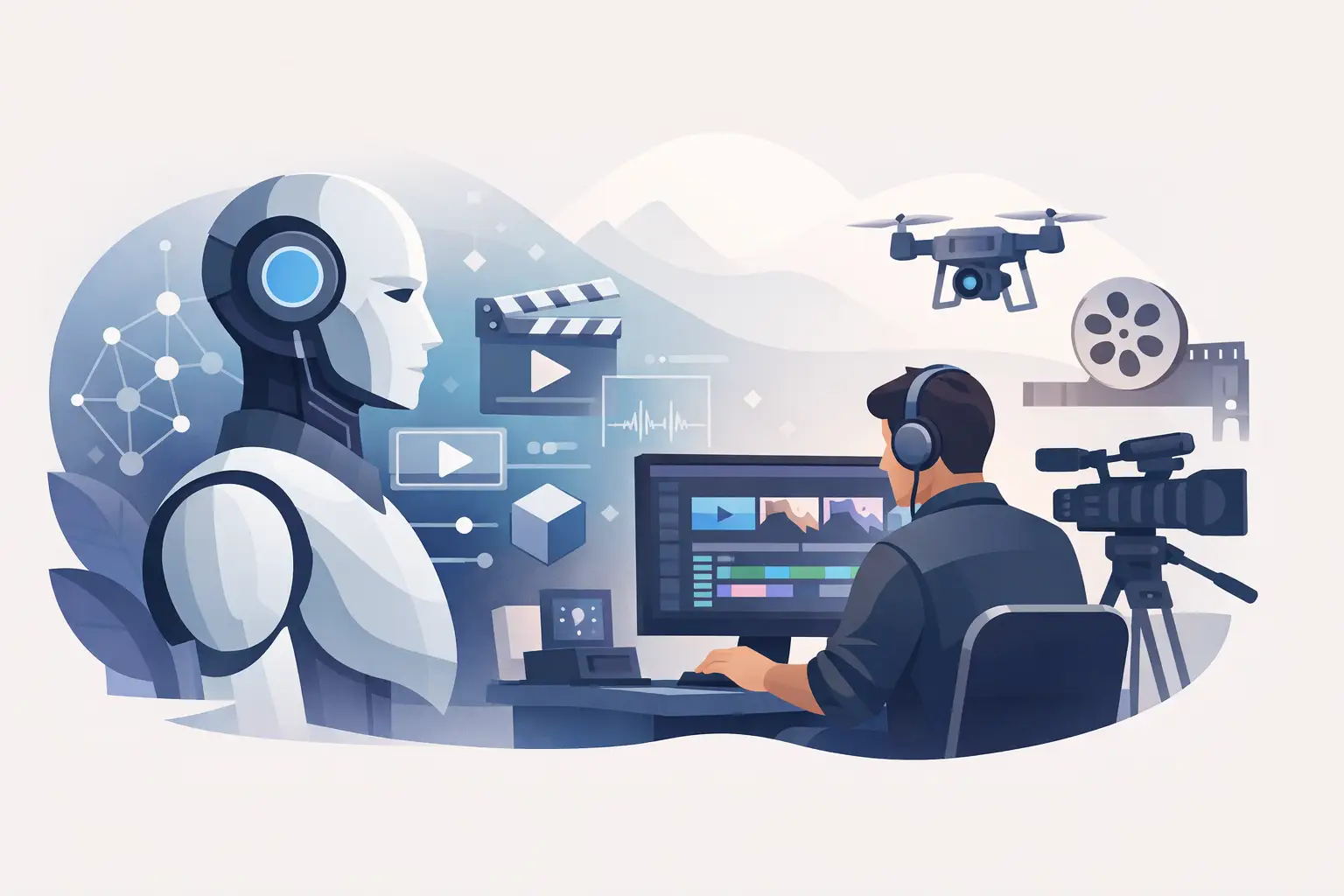
Every indie filmmaker knows the feeling: you lose three hours to a task that has nothing to do with the shot, the scene, or the story. A transcript needs cleaning. A pitch deck needs structure. A rough cut needs searchable footage notes. This is where AI tools for filmmakers start to matter - not as a gimmick, and not as a replacement for craft, but as leverage for teams working with real budget pressure.
The smart question is not whether to use AI. It is where it saves time without flattening your voice. For indie creators, that distinction matters more than hype. If your edge is originality, the wrong tool can make your work feel generic fast.
Where AI tools for filmmakers earn their keep
The best use of AI in film is usually the least glamorous. It is the work around the work: logging footage, organizing research, creating transcripts, generating first-pass subtitles, cleaning dialogue, summarizing interviews, and helping small teams move faster between production stages.
That matters because independent production is full of bottlenecks. A studio can throw people at a problem. A DIY crew usually cannot. If one producer is also handling clearances, social clips, festival submissions, and release planning, speed is not a luxury. It is survival.
AI also helps earlier than many filmmakers expect. During development, it can pressure-test concepts, help compare versions of a logline, or turn scattered notes into something closer to a treatment. During post, it can make raw material easier to search and shape. During distribution, it can support trailer copy, metadata, localization, and audience-facing assets.
Used well, these tools reduce friction. Used badly, they create more cleanup than they save. That is the trade-off.
Development: move faster, think harder
Writers and directors are already using AI to break deadlocks in development, but the best results come when you treat it like an aggressive assistant, not a co-author. It can help outline possibilities, surface clichés in a premise, suggest alternate scene structures, and reformat notes into usable production documents.
That does not mean it can write your film for you. It can produce competent language at speed, but competent is rarely what gets an indie project financed, programmed, or remembered. If your script starts sounding like every other script assembled from familiar beats, you have gained speed and lost identity.
A better approach is to use AI for divergence and compression. Ask for ten framing angles on a synopsis, three ways to tighten a character description, or a cleaner draft of a grant paragraph you already wrote. Keep the original voice in your hands. Let the machine handle iteration, not authorship.
For documentary filmmakers, this can be even more useful. Research-heavy projects generate interviews, articles, archival notes, and long transcripts. AI can summarize, tag recurring themes, and group material around story threads. It will still miss nuance, especially irony, contradiction, and emotional subtext, but it can cut the first layer of chaos.
What to watch for in script and research workflows
Speed can trick you into lowering your standards. If a tool gives you a polished paragraph in five seconds, it is tempting to move on. That is exactly where weak ideas sneak through. Check tone, accuracy, and originality every time.
There is also a rights issue. If your material is confidential, unreleased, or contract-sensitive, you need to know where your data is going. Not every platform is built for professional media handling. Read the terms before you upload a script, a treatment, or interview transcripts with sensitive material.
Pre-production: less chaos, better prep
Pre-production is full of repetitive work that AI can make less painful. Shot list drafts, call sheet templates, location research summaries, scheduling logic, budget category cleanup, and pitch materials are all fair game.
This is especially useful for smaller productions where one person wears five hats. If you can turn handwritten notes into a cleaner plan in minutes, you free up time for decisions that actually affect the film.
Still, prep is where context matters most. A generated schedule does not know your lead actor always runs late after day jobs, or that the warehouse location loses usable sound after 4 p.m. AI can propose structure, but line producers and assistant directors know reality. Human judgment is still the thing that keeps the day from collapsing.
Storyboards and visual references are another area where AI gets attention. For some filmmakers, fast concept frames help align a team before spending on design or location tests. For others, the images look too synthetic or too derivative to be useful beyond internal brainstorming.
That "it depends" is worth respecting. If you need a mood reference for a pitch deck, AI visuals may be enough. If you need production design clarity or a distinct visual language, you will probably outgrow them quickly.
Production and post: the strongest real-world use case
Post is where AI tools for filmmakers are proving value right now. Transcription, captioning, dialogue isolation, noise reduction, scene detection, media tagging, and searchable video are practical wins. These are not theoretical features. They save hours.
Editors working with interview-heavy footage can find moments faster when clips are transcribed and tagged. Documentary teams can pull all mentions of a topic without scanning manually. Producers can build review workflows around text search instead of memory. For crews balancing paid work with passion projects, that time adds up fast.
Audio cleanup is another big one. AI-assisted tools can reduce background noise, separate dialogue from messy field recordings, and improve clarity enough to rescue material that would otherwise be painful to use. Not every clip can be saved, and overprocessing can make dialogue sound thin or artificial, but when budgets are tight, "usable" is a major upgrade.
Color and finishing are more mixed. AI can help with matching shots, upscaling, and technical adjustments, but aesthetic decisions still benefit from a human eye. If your film lives or dies on texture, skin tone, contrast, and mood, automation should stay in support mode.
The risk of polished sameness
One quiet danger in AI-assisted post is aesthetic flattening. If too many creators use the same presets, the same trailer structures, the same poster prompts, and the same voice cleanup profile, indie work starts looking less indie.
That is bad business and bad art. Audiences come to independent film for perspective, not template energy. The point is not to make your project look machine-perfect. The point is to remove friction so the human choices stand out more clearly.
Marketing and distribution: where small teams can punch up
Once the film is done, the workload shifts again. You need synopsis variations, key art concepts, trailer copy, social captions, festival descriptions, metadata, subtitle versions, and audience targeting ideas. This is another zone where AI can help smaller teams act bigger.
It can generate multiple versions of a logline for different audiences, draft ad copy, suggest title tests, or repurpose a press blurb into shorter promotional formats. For creators distributing independently, that matters. Great films do not automatically get discovered. Packaging still decides a lot.
But this is also where generic messaging spreads fast. If your campaign sounds like everyone else's campaign, performance drops. Strong marketing still needs taste, positioning, and a real understanding of who the film is for.
That is why the best use of AI in distribution is acceleration, not identity. Let it create options. Then cut ruthlessly. If you are building your audience on a platform serving indie viewers and grassroots creators, your messaging should sound human, specific, and culturally aware. That is far more effective than polished filler.
How to choose the right AI stack
Do not start with the tool. Start with the bottleneck.
If your team loses time in logging and organizing footage, look for transcription and search tools. If you are stuck in development, use AI for outlining and document cleanup. If marketing is the weak point, focus on copy assistance, metadata support, and localization. The right stack is the one that removes the drag from your actual workflow.
Keep it lean. Too many subscriptions will eat the savings fast. Most indie filmmakers do not need a giant AI ecosystem. They need two or three useful tools they can trust under deadline.
Also ask a blunt question: does this tool create work for me later? If the output requires heavy correction, weird formatting fixes, or constant fact-checking, the efficiency may be fake. Fast is only valuable if it stays usable.
The indie advantage
Big players have more money, but independent creators usually move faster. That is why AI can be such a strong fit for the indie film world. It helps small teams test ideas, shorten admin time, and get more mileage out of limited resources.
The advantage is not automation by itself. The advantage is autonomy. When filmmakers can spend less time buried in repetitive tasks and more time shaping story, performance, rhythm, and release strategy, they get closer to what matters. That is the real win.
If you are building films outside the gatekeeping machine, use AI the same way you use every other tool - with intent, taste, and a clear sense of what only you can bring. The tech can help you move. It should never decide where you are going.